Overview
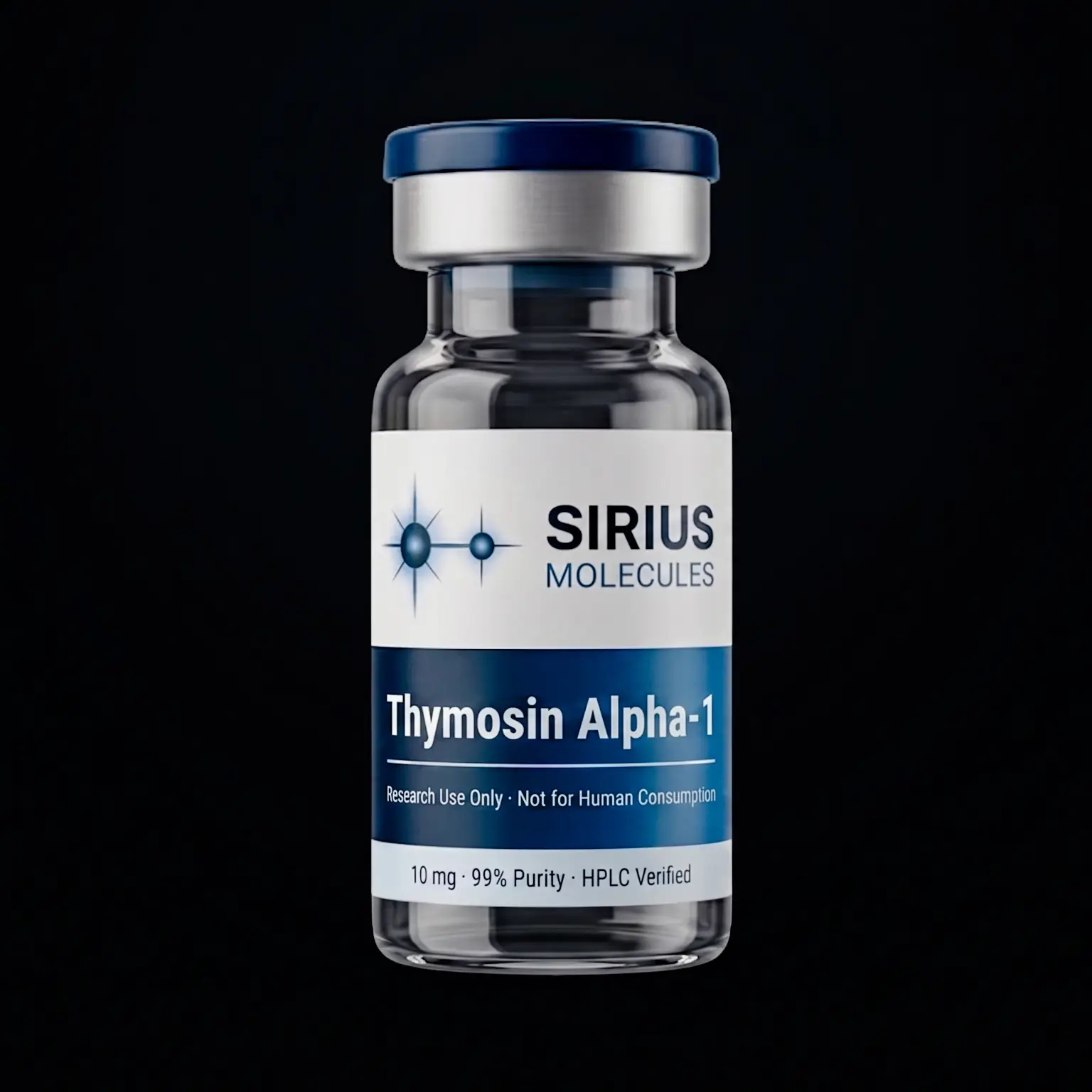
Thymosin Alpha 1 (Tα1) is a 28-amino-acid peptide originally isolated from Thymosin Fraction 5, a thymic extract. Since its first characterization, Tα1 has been studied extensively in preclinical and clinical research for its role in innate and adaptive immune pathway modulation (Goldstein et al., 1977 — PMID: 406330).
History
Tα1 was first isolated and sequenced in the late 1970s from calf thymus tissue. Research has since characterized the peptide across a wide range of immunological models, including studies of T-cell maturation, cytokine signaling, and antiviral pathway activity. The compound has generated sustained research interest across decades of preclinical and clinical investigation (King & Tuthill, 2016).
Structure & Molecular Data
| CAS Number | 62304-98-7 |
| Molecular Formula | C₁₂₉H₂₁₅N₃₃O₅₅ |
| Molecular Weight | 3,108.33 g/mol |
| Amino Acid Count / Structure | 28-amino-acid peptide |
| PubChem CID | 16129706 |
| Sequence | Ac-Ser-Asp-Ala-Ala-Val-Asp-Thr-Ser-Ser-Glu-Ile-Thr-Thr-Lys-Asp-Leu-Lys-Glu-Lys-Lys-Glu-Val-Val-Glu-Glu-Ala-Glu-Asn |
| Appearance | Lyophilized white powder |
| Storage | Store at -20°C. Protect from light. |
| Solubility | Soluble in sterile water and bacteriostatic water |
Compound Class & Mechanism
Thymosin Alpha 1 has been reported to engage Toll-like receptor 9 (TLR9) and TLR2 pathways in preclinical models, with research documenting downstream activation of myeloid differentiation primary response 88 (MyD88) and NF-κB signaling. These pathways have been associated with dendritic cell maturation and enhanced antigen presentation in experimental settings.
Research has also characterized Tα1 effects on T-cell differentiation pathways, including effects on Th1/Th2 balance, regulatory T-cell function, and CD8+ T-cell responses to viral antigens in preclinical models. These properties have made Tα1 a frequently referenced research tool in viral and immunological pathway studies (Romani et al., 2012).
Research Findings
Thymosin Alpha 1 has been investigated in an extensive body of preclinical and clinical research spanning immunology, infectious disease models, and oncology research. Published research has documented findings in the following domains:
Key Research Areas
- TLR Pathway Research: TLR9 and TLR2 signaling in dendritic cell research models
- T-Cell Biology: Th1/Th2 balance, Treg function in preclinical immunological studies
- Antiviral Research: viral pathway research across multiple model systems
- Oncology Research: tumor immunology in preclinical research models
Collectively, Thymosin Alpha 1 occupies a well-established research niche as a reference immunomodulatory peptide, with documented research activity across TLR, T-cell, and antiviral pathway domains (King & Tuthill, 2016).
Research Context
Researchers study Thymosin Alpha 1 to investigate immune pathway modulation, particularly in the context of TLR signaling and T-cell response research. The compound has sustained research interest across immunology, antiviral research, and tumor immunology, making it one of the most extensively studied thymic peptides in biomedical literature.
References
Goldstein AL. et al. (1977). Thymosin α 1: isolation and sequence analysis of an immunologically active thymic polypeptide. PNAS. PMID: 406330
King R., Tuthill C. (2016). Immune modulation with thymosin alpha 1 treatment. Vitamins and Hormones.
Romani L. et al. (2012). Thymosin α1 activates dendritic cells for antifungal Th1 resistance through Toll-like receptor signaling. Blood.
Garaci E. et al. (2000). Thymosin α1 in the treatment of cancer: from basic research to clinical application. International Journal of Immunopharmacology.
Tuthill CW. et al. (2013). Thymosin alpha 1 — a peptide immune modulator with a broad range of clinical applications. Clinical & Experimental Pharmacology.
Mutchnick MG. et al. (1991). Prospective study of thymosin alpha-1 for treatment of chronic hepatitis B. Digestive Diseases and Sciences.
| REGULATORY & LEGAL NOTICE
Intended Use. This product is sold exclusively as a research chemical for use in controlled laboratory settings by qualified scientific professionals. It is intended solely for in vitro research, analytical standards, and non-clinical preclinical experimentation. The product is not a drug, dietary supplement, cosmetic, food product, or consumer article of any kind. Prohibited Uses. This product is NOT for use in humans, NOT for veterinary use, NOT for in vivo use in any species, NOT for diagnostic use, NOT for therapeutic use, NOT for food or agricultural use, and NOT for compounding into any preparation intended for administration to humans or animals. Qualified Professionals Only. Purchasers represent that they are qualified scientific professionals, licensed researchers, or authorized personnel at a research institution, and that this product will be handled in accordance with all applicable institutional, federal, state, and local regulations governing research chemicals. Regulatory Notice. The statements made regarding this product have not been evaluated by the U.S. Food and Drug Administration. This product has not been approved by the FDA for any therapeutic, diagnostic, or preventive use. Not a Compounding or Outsourcing Facility. Sirius Molecules is a research chemical supplier. Sirius Molecules is not a compounding pharmacy or outsourcing facility as defined under Sections 503A or 503B of the Federal Food, Drug, and Cosmetic Act. Legal Compliance. Purchasers are solely responsible for ensuring that their acquisition, possession, handling, and use of this product complies with all applicable laws and regulations in their jurisdiction. |