Overview
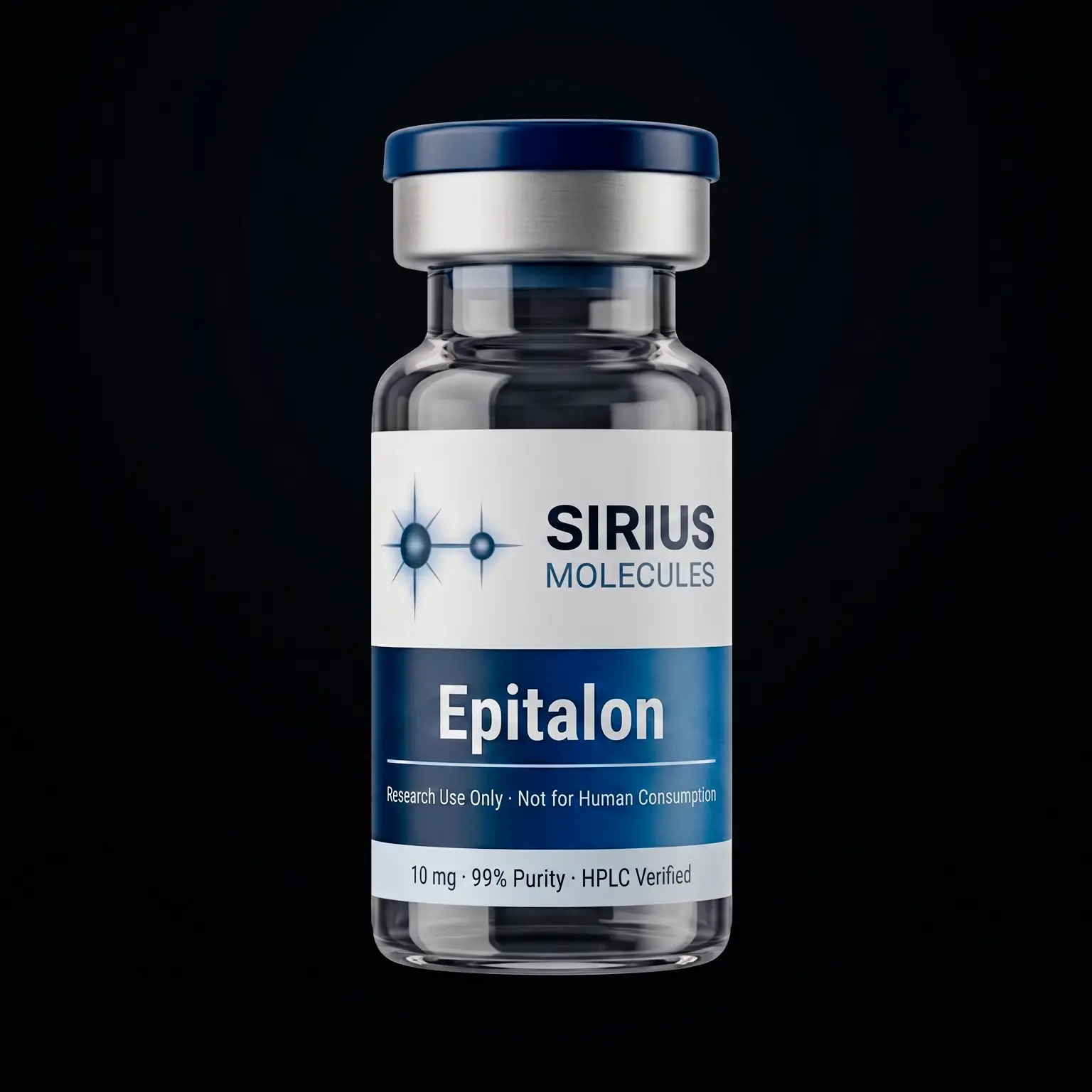
Epitalon (also referred to as Epithalon or Epithalamin) is a synthetic tetrapeptide developed at the Saint Petersburg Institute of Bioregulation and Gerontology by Vladimir Khavinson and colleagues. The compound was synthesized to mimic the biologically active fragment of epithalamin, a polypeptide preparation isolated from bovine pineal gland. Since its synthesis, Epitalon has been studied in preclinical and clinical research for its role in telomerase pathway dynamics and pineal-related biological processes (Khavinson et al., 2003 — PMID: 14523412).
History
Epitalon emerged from a long-running research program at the Saint Petersburg Institute of Bioregulation and Gerontology investigating short bioactive peptide fragments derived from glandular tissue extracts. Khavinson and colleagues isolated and characterized the active tetrapeptide sequence from the larger epithalamin preparation, then synthesized it for research use. Decades of subsequent research have characterized the compound across telomerase, melatonin pathway, and aging research domains (Anisimov & Khavinson, 2010).
Structure & Molecular Data
| CAS Number | 307297-39-8 |
| Molecular Formula | C₁₄H₂₂N₄O₉ |
| Molecular Weight | 390.35 g/mol |
| Amino Acid Count / Structure | 4-amino-acid synthetic tetrapeptide |
| PubChem CID | 219042 |
| Sequence | Ala-Glu-Asp-Gly |
| Appearance | Lyophilized white powder |
| Storage | Store at -20°C. Protect from light and moisture. |
| Solubility | Soluble in sterile water and bacteriostatic water for research preparation |
Compound Class & Mechanism
Epitalon has been reported in preclinical research to interact with telomerase regulatory pathways, with published studies documenting effects on telomerase reverse transcriptase (TERT) gene expression and telomere length in somatic cell models. The precise receptor target remains under investigation in the research literature, with current work focused on its possible interaction with chromatin remodeling and gene expression regulation pathways.
Research has additionally characterized Epitalon effects on melatonin secretion in preclinical pineal gland models, as well as effects on circadian rhythm gene expression. The compound’s small size (4 amino acids) and stability profile have made it a frequently referenced research tool for investigating short-peptide regulatory effects on aging-associated cellular pathways (Khavinson et al., 2014).
Research Findings
Epitalon has been investigated in preclinical and clinical research spanning telomerase pathway research, melatonin pathway studies, and aging research models. Published research has documented findings in the following domains:
Key Research Areas
- Telomerase Pathway: TERT gene expression and telomere length research in somatic cell models
- Pineal & Melatonin Research: melatonin secretion pathway studies in preclinical models
- Circadian Biology: circadian rhythm gene expression research
- Aging Research: age-related cellular pathway research in preclinical models
Collectively, the Epitalon research literature has established the compound as a distinctive research tool at the intersection of telomerase pathway biology, pineal gland research, and aging-associated cellular pathway investigation in preclinical environments (Khavinson, 2014).
Research Context
Researchers study Epitalon to investigate short-peptide modulation of telomerase pathway dynamics, pineal gland biology, and circadian rhythm regulation in preclinical research models. Its small size, stability, and decades of research literature make it a commonly referenced research tool in studies of peptide-mediated regulation of aging-associated cellular processes.
References
Khavinson VKh. et al. (2003). Effect of epithalon on biomarkers of aging, life span and spontaneous tumor incidence in female Swiss-derived SHR mice. Biogerontology. PMID: 14523412
Khavinson VKh. et al. (2014). Epitalon peptide induces telomerase activity and telomere elongation in human somatic cells. Bulletin of Experimental Biology and Medicine.
Anisimov VN., Khavinson VKh. (2010). Peptide bioregulation of aging: results and prospects. Biogerontology.
Khavinson VKh. (2002). Peptides and ageing. Neuroendocrinology Letters.
Korkushko OV. et al. (2006). Peptide geroprotector from the pituitary gland inhibits rapid aging of elderly people. Bulletin of Experimental Biology and Medicine.
Anisimov SV. et al. (2002). Effect of melatonin and pineal peptide preparation epithalamin on life span and free radical oxidation in rats. Mechanisms of Ageing and Development.
| REGULATORY & LEGAL NOTICE
Intended Use. This product is sold exclusively as a research chemical for use in controlled laboratory settings by qualified scientific professionals. It is intended solely for in vitro research, analytical standards, and non-clinical preclinical experimentation. The product is not a drug, dietary supplement, cosmetic, food product, or consumer article of any kind. Prohibited Uses. This product is NOT for use in humans, NOT for veterinary use, NOT for in vivo use in any species, NOT for diagnostic use, NOT for therapeutic use, NOT for food or agricultural use, and NOT for compounding into any preparation intended for administration to humans or animals. Qualified Professionals Only. Purchasers represent that they are qualified scientific professionals, licensed researchers, or authorized personnel at a research institution, and that this product will be handled in accordance with all applicable institutional, federal, state, and local regulations governing research chemicals. Regulatory Notice. The statements made regarding this product have not been evaluated by the U.S. Food and Drug Administration. This product has not been approved by the FDA for any therapeutic, diagnostic, or preventive use. Not a Compounding or Outsourcing Facility. Sirius Molecules is a research chemical supplier. Sirius Molecules is not a compounding pharmacy or outsourcing facility as defined under Sections 503A or 503B of the Federal Food, Drug, and Cosmetic Act. Legal Compliance. Purchasers are solely responsible for ensuring that their acquisition, possession, handling, and use of this product complies with all applicable laws and regulations in their jurisdiction. |