Overview
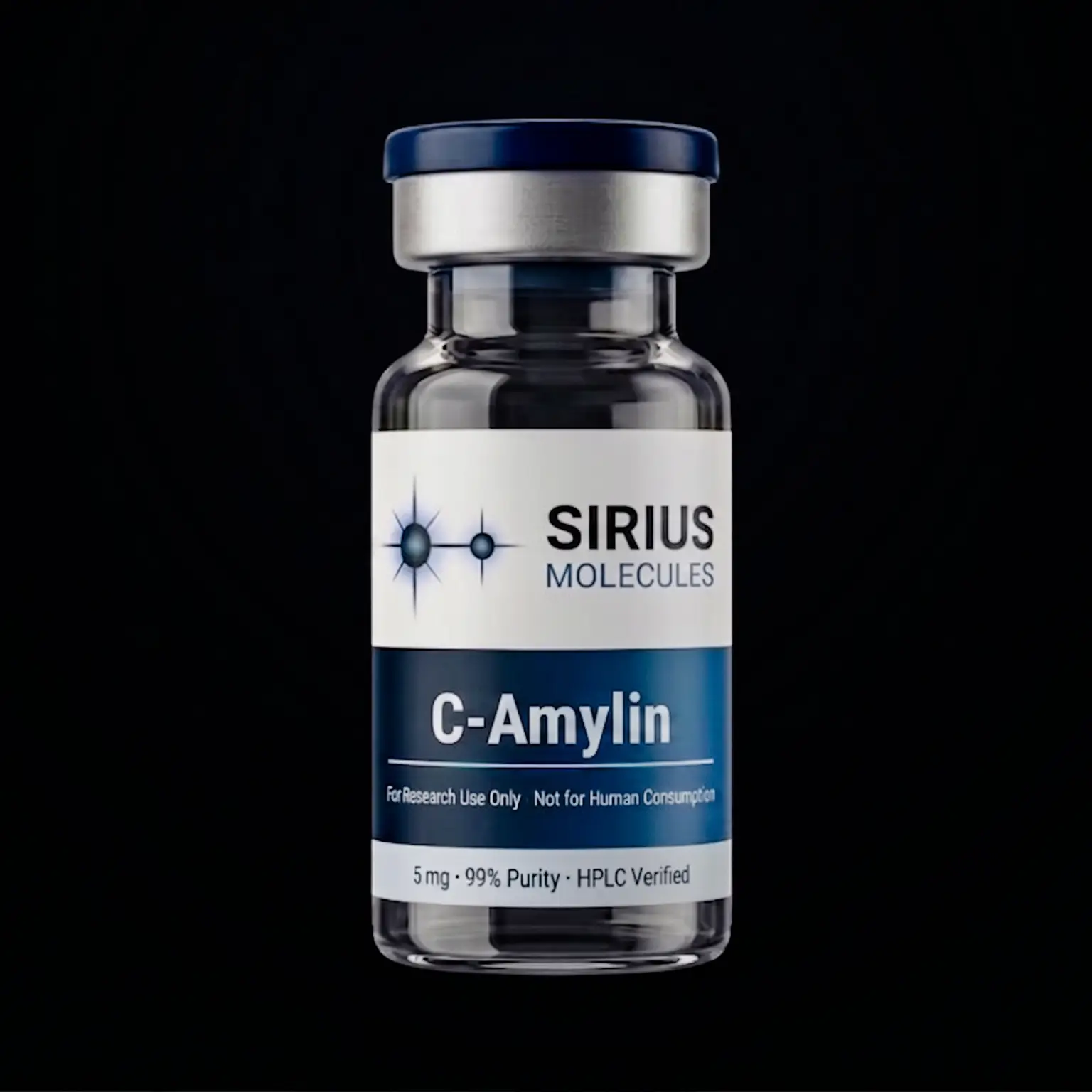
C-Amylin is a synthetic long-acting amylin analog engineered with a C18 fatty-acid side chain for albumin binding and extended circulation. The compound has been studied in preclinical and clinical research as an amylin receptor (AMY-R) and calcitonin receptor (CT-R) co-agonist, with research interest in its role in satiety pathway biology distinct from GLP-1 receptor pharmacology (Larsen et al., 2021 — PMID: 34543252).
History
Amylin is an endogenous 37-amino-acid peptide co-secreted with insulin from pancreatic beta cells, discovered in the 1980s. C-Amylin was developed as part of research efforts to create a long-acting amylin analog suitable for weekly research administration protocols. Recent research has focused on its combination potential with GLP-1 receptor agonists for multi-pathway research designs (Enebo et al., 2021).
Structure & Molecular Data
| CAS Number | 1415456-99-3 |
| Molecular Formula | C₁₇₄H₂₇₇N₄₉O₅₅S₂ |
| Molecular Weight | 3,989.45 g/mol |
| Amino Acid Count / Structure | 32-amino-acid long-acting amylin analog |
| PubChem CID | 170533611 |
| Sequence | Modified 32-amino-acid amylin receptor agonist with C18 fatty-acid side chain for albumin binding and extended half-life |
| Appearance | Lyophilized white powder |
| Storage | Store at -20°C. Protect from light. |
| Solubility | Soluble in sterile water and bacteriostatic water |
Compound Class & Mechanism
C-Amylin binds to amylin receptors (AMY1R, AMY2R, AMY3R) and calcitonin receptors (CT-R) in preclinical models. These G protein-coupled receptors signal primarily through Gs-mediated adenylyl cyclase activation, with downstream effects on area postrema and hypothalamic satiety signaling pathways that are distinct from GLP-1 receptor-mediated pathways.
Research has characterized cagrilintide’s pharmacodynamic profile in preclinical models, including effects on gastric emptying, postprandial glucagon secretion, and satiety pathway activation. Its C18 fatty-acid modification enables weekly research administration, and research interest has focused on its combination with GLP-1R agonists for multi-pathway metabolic research (Lau et al., 2021).
Research Findings
C-Amylin has been investigated in preclinical and clinical research spanning amylin pathway research, metabolic research, and combination research protocols with GLP-1R agonists. Published research has documented findings in the following domains:
Key Research Areas
- Amylin Receptor Pharmacology: AMY-R and CT-R receptor binding profile research
- Satiety Pathway Research: area postrema and hypothalamic satiety research
- Metabolic Pathway Research: preclinical body composition and glucose research
- Combination Research Protocols: amylin + GLP-1R co-administration research designs
Collectively, [C-Amylin] represents an emerging research tool for investigating amylin-pathway biology independently of and in combination with GLP-1R-mediated research in preclinical environments (Lau et al., 2021).
Research Context
Researchers study [C-Amylin] to investigate amylin and calcitonin receptor pharmacology in the context of long-acting administration profiles, and to explore multi-pathway research designs combining amylin receptor agonism with GLP-1 receptor agonism. The compound’s receptor profile makes it distinctive among modern metabolic research compounds.
References
Larsen AT. et al. (2021). [C-Amylin], a long-acting amylin analogue: discovery, development, and clinical implications. Drugs in R&D. PMID: 34543252
Enebo LB. et al. (2021). Safety, tolerability, pharmacokinetics, and pharmacodynamics of concomitant administration of multiple doses of [C-Amylin] with [GLP-1S] 2·4 mg for weight management. Lancet.
Lau DCW. et al. (2021). Co-administration of [C-Amylin] and [GLP-1S] in adults with overweight or obesity. New England Journal of Medicine.
Hay DL. et al. (2015). Amylin: pharmacology, physiology, and clinical potential. Pharmacological Reviews.
Roth JD. et al. (2012). Pharmacology, physiology, and mechanisms of incretin hormone action. Cell Metabolism.
Mathiesen DS. et al. (2022). The effects of dual GLP-1/GIP receptor agonism on glucagon secretion — a review. International Journal of Molecular Sciences.
Regulatory & Legal Notice
| REGULATORY & LEGAL NOTICE
Intended Use. This product is sold exclusively as a research chemical for use in controlled laboratory settings by qualified scientific professionals. It is intended solely for in vitro research, analytical standards, and non-clinical preclinical experimentation. The product is not a drug, dietary supplement, cosmetic, food product, or consumer article of any kind. Prohibited Uses. This product is NOT for use in humans, NOT for veterinary use, NOT for in vivo use in any species, NOT for diagnostic use, NOT for therapeutic use, NOT for food or agricultural use, and NOT for compounding into any preparation intended for administration to humans or animals. Qualified Professionals Only. Purchasers represent that they are qualified scientific professionals, licensed researchers, or authorized personnel at a research institution, and that this product will be handled in accordance with all applicable institutional, federal, state, and local regulations governing research chemicals. Regulatory Notice. The statements made regarding this product have not been evaluated by the U.S. Food and Drug Administration. This product has not been approved by the FDA for any therapeutic, diagnostic, or preventive use. Not a Compounding or Outsourcing Facility. Sirius Molecules is a research chemical supplier. Sirius Molecules is not a compounding pharmacy or outsourcing facility as defined under Sections 503A or 503B of the Federal Food, Drug, and Cosmetic Act. Legal Compliance. Purchasers are solely responsible for ensuring that their acquisition, possession, handling, and use of this product complies with all applicable laws and regulations in their jurisdiction. |