

Structure-Function: Why a Molecule’s Shape Is Its Job Description
In molecular science, form and function are inseparable. A peptide’s three-dimensional shape is, in effect, its job description. Here’s the principle that ties it together.
How peptides work and are made; the research frontier.
In molecular science, form and function are inseparable. A peptide’s three-dimensional shape is, in effect, its job description. Here’s the principle that ties it together.
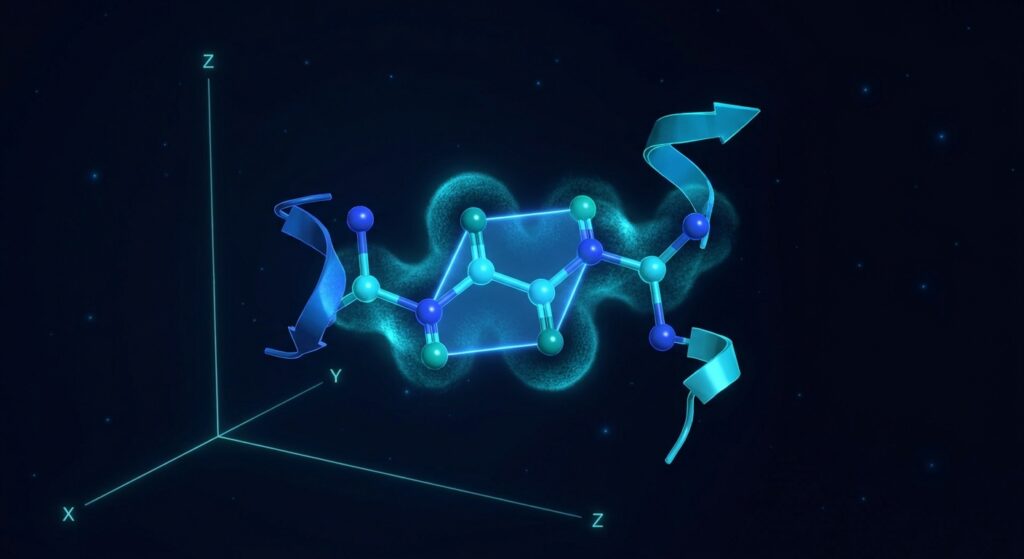
Every peptide is held together by one repeating connection: the peptide bond. Its unusual rigidity quietly shapes the entire molecule. Here’s what makes it special.
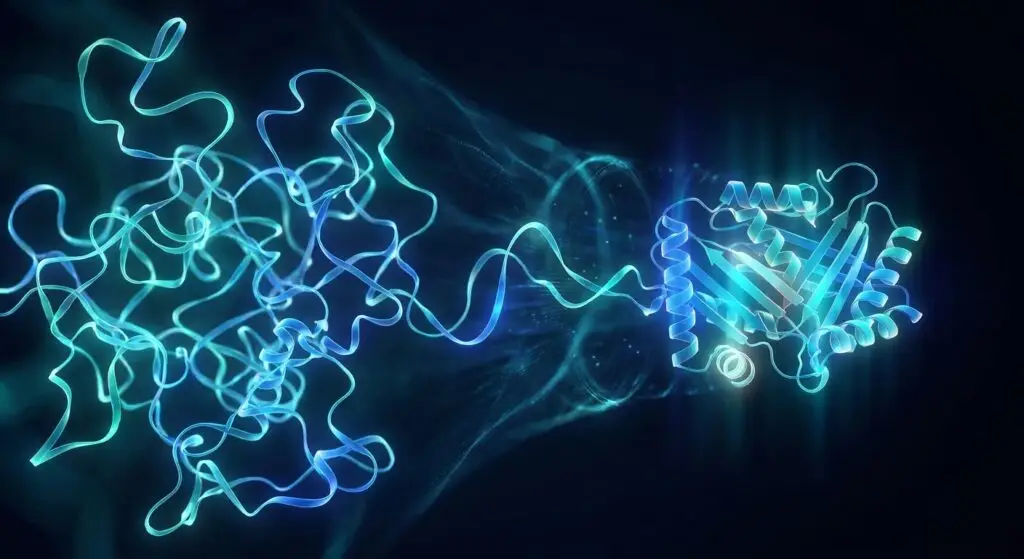
A freshly built peptide is a floppy string. What turns it into a defined shape? A look at the forces that drive folding and why they govern molecular behavior.

Amino acids come in mirror-image forms, yet life overwhelmingly uses the left-handed kind. Here’s what chirality is and why it’s central to characterizing a peptide.
Solid-phase synthesis builds a peptide one residue at a time on a tiny resin bead. Here’s how the cycle works and why each step’s fidelity defines the final molecule.
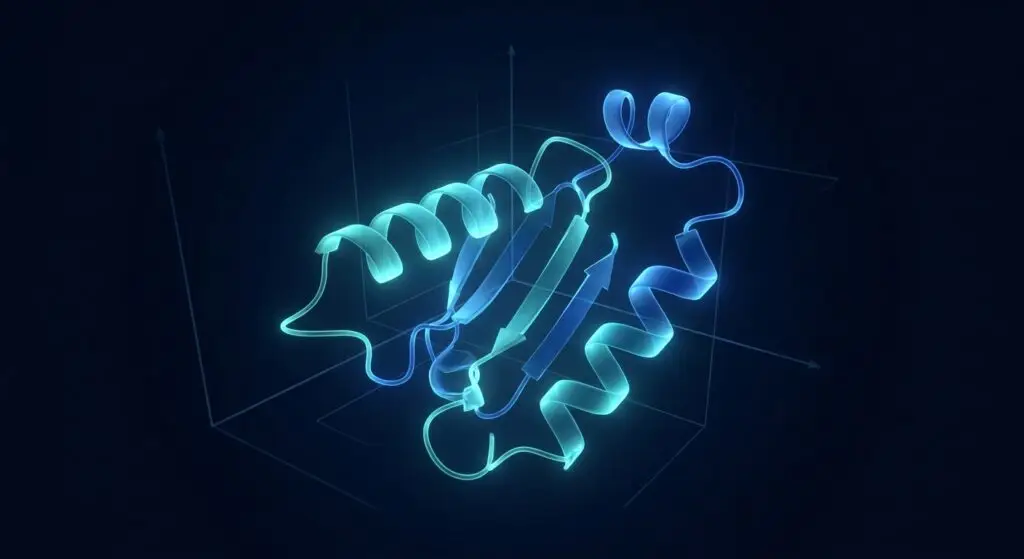
A peptide isn’t just a list of amino acids—it’s a precise three-dimensional shape. Here’s why folded geometry, not the sequence alone, defines molecular identity.

Most synthetic peptides ship as salts, and the counterion riding along can account for a meaningful slice of the powder’s weight. Here’s the analytical story.

A vial can be 99% pure and still contain far less actual peptide than the label suggests. Net peptide content is the figure that closes that gap.