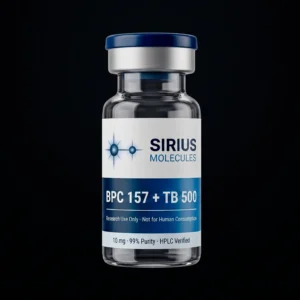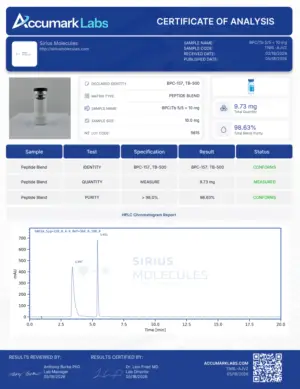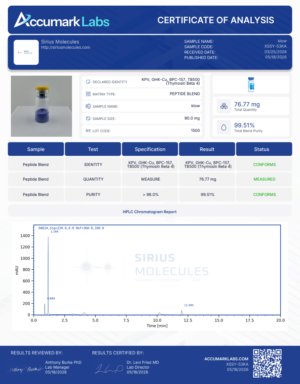
Overview
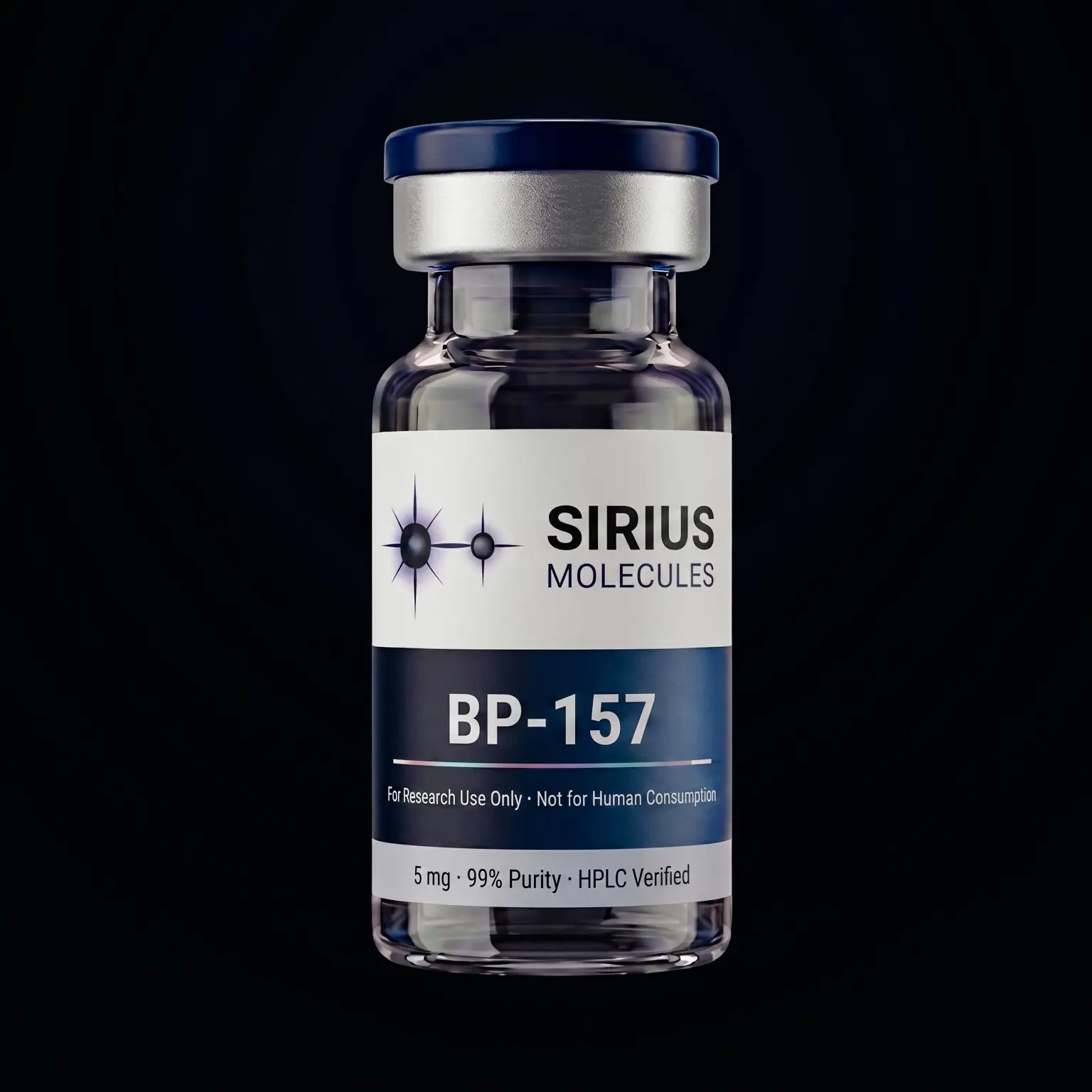
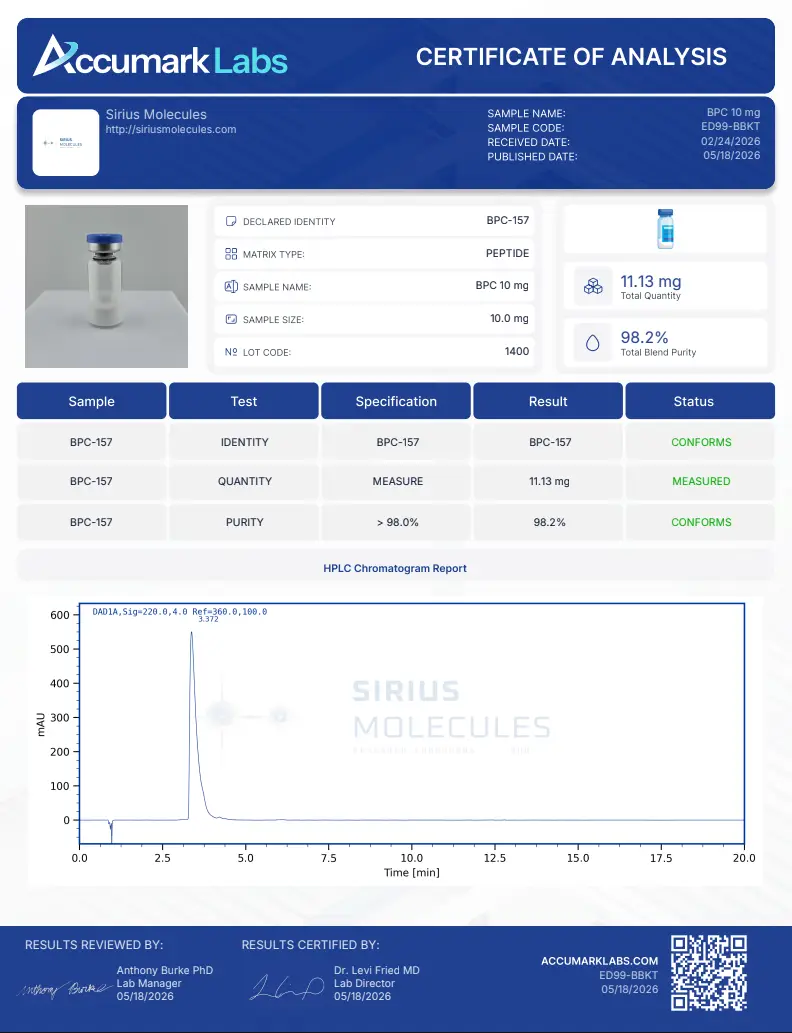
BPC-157 is a synthetic pentadecapeptide composed of 15 amino acids, originally derived from a naturally occurring protein fragment identified in human gastric juice. Since its initial characterization in the early 1990s, BPC-157 has been the subject of extensive preclinical investigation in controlled experimental settings, with particular research focus on molecular signaling, structural tissue remodeling, and angiogenic processes in laboratory models (Sikiric et al., 1993 — PMID: 8298609).
History
The peptide was first synthesized by researchers investigating cytoprotective proteins found in gastric juice. Early experimental work focused on its activity profile in gastric integrity models. Over the following two decades, research broadened into vascular, structural, and epithelial systems, where BPC-157 has been reported to demonstrate activity relevant to molecular remodeling, cellular migration, and tissue resilience in preclinical contexts (Sikiric et al., Current Pharmaceutical Design, 2020).
Structure & Molecular Data
| CAS Number | 137525-51-0 |
| Molecular Formula | C₆₂H₉₈N₁₆O₂₂ |
| Molecular Weight | 1419.556 g/mol |
| Amino Acid Count / Structure | 15-amino-acid pentadecapeptide |
| PubChem CID | 108101 |
| Sequence | Gly-Glu-Pro-Pro-Pro-Gly-Lys-Pro-Ala-Asp-Asp-Ala-Gly-Leu-Val |
| Appearance | Lyophilized white powder |
| Storage | Store at -20°C. Protect from light and moisture. |
| Solubility | Soluble in water and bacteriostatic water for research preparation |
Compound Class & Mechanism
BPC-157 is classified as a cytoprotective synthetic peptide. Its mechanism of action in preclinical research models has been associated with modulation of nitric oxide signaling pathways, upregulation of growth factor receptor expression (particularly VEGFR2), and interaction with the dopamine and serotonin systems in experimental settings.
Research activity has been documented across multiple signaling contexts, including effects on focal adhesion kinase (FAK), paxillin expression, and endothelial nitric oxide synthase (eNOS) activity. In structural tissue models, BPC-157 has been associated with modulation of collagen expression and extracellular matrix remodeling pathways (Seiwerth et al., 2018).
Research Findings
BPC-157 has been investigated in a wide range of preclinical models, with research activity spanning structural, vascular, epithelial, and systemic biological systems. Published research has documented findings in the following domains:
Key Research Areas
- Structural Models: collagen regulation, tendon and ligament tissue dynamics, matrix remodeling activity
- Vascular Models: angiogenesis research, nitric oxide system modulation, endothelial signaling
- Epithelial Models: cellular migration dynamics, vessel formation, matrix integrity studies
- Systemic Research: signaling pathway interactions, cellular viability studies, ischemia-reperfusion research models
Collectively, these findings have positioned BPC-157 as a versatile reference compound for experimental research into molecular signaling and tissue biology. Its activity profile across multiple preclinical models provides a platform for investigating pathway dynamics and cellular resilience mechanisms in controlled laboratory environments (Sikiric et al., Current Pharmaceutical Design, 2020).
Research Context
Researchers study BPC-157 to investigate questions about tissue remodeling mechanisms, angiogenic pathway modulation, and the cytoprotective properties of gastric-derived peptides. The compound has generated research interest across disciplines including regenerative biology, vascular research, and molecular pharmacology. Its stability profile and activity across diverse experimental models have made it a commonly referenced research tool in preclinical studies exploring structural integrity and pathway signaling.
References
Sikiric P. et al. (1993). A new gastric juice peptide, BPC — characterization and synthesis. Journal of Physiology-Paris. PMID: 8298609
Pavlovic I. et al. (2003). The promoting effect of pentadecapeptide BPC-157 on tendon healing involves tendon outgrowth, cell survival and cell migration. Journal of Applied Physiology. PMID: 14554208
Chang CH. et al. (2009). Protective effects of BPC-157 in experimental colitis models. World Journal of Gastroenterology.
Hsieh MJ. et al. (2015). Therapeutic potential of pro-angiogenic BPC-157 in wound healing and burn models. PMID: 25995620
Seiwerth S. et al. (2018). Mechanisms of angiogenic activity and NO-system modulation by BPC-157. Frontiers in Pharmacology.
Kang EA. et al. (2021). Protective effects of BPC-157 on liver, kidney, and lung in ischemia-reperfusion injury models. Frontiers in Pharmacology. DOI: 10.3389/fphar.2021.627533
Sikiric P. et al. (2020). Brain-gut axis and the pentadecapeptide BPC-157. Current Pharmaceutical Design. DOI: 10.2174/1381612826666200121145711
| REGULATORY & LEGAL NOTICE
Intended Use. This product is sold exclusively as a research chemical for use in controlled laboratory settings by qualified scientific professionals. It is intended solely for in vitro research, analytical standards, and non-clinical preclinical experimentation. The product is not a drug, dietary supplement, cosmetic, food product, or consumer article of any kind. Prohibited Uses. This product is NOT for use in humans, NOT for veterinary use, NOT for in vivo use in any species, NOT for diagnostic use, NOT for therapeutic use, NOT for food or agricultural use, and NOT for compounding into any preparation intended for administration to humans or animals. Qualified Professionals Only. Purchasers represent that they are qualified scientific professionals, licensed researchers, or authorized personnel at a research institution, and that this product will be handled in accordance with all applicable institutional, federal, state, and local regulations governing research chemicals. Regulatory Notice. The statements made regarding this product have not been evaluated by the U.S. Food and Drug Administration. This product has not been approved by the FDA for any therapeutic, diagnostic, or preventive use. Not a Compounding or Outsourcing Facility. Sirius Molecules is a research chemical supplier. Sirius Molecules is not a compounding pharmacy or outsourcing facility as defined under Sections 503A or 503B of the Federal Food, Drug, and Cosmetic Act. Legal Compliance. Purchasers are solely responsible for ensuring that their acquisition, possession, handling, and use of this product complies with all applicable laws and regulations in their jurisdiction. |