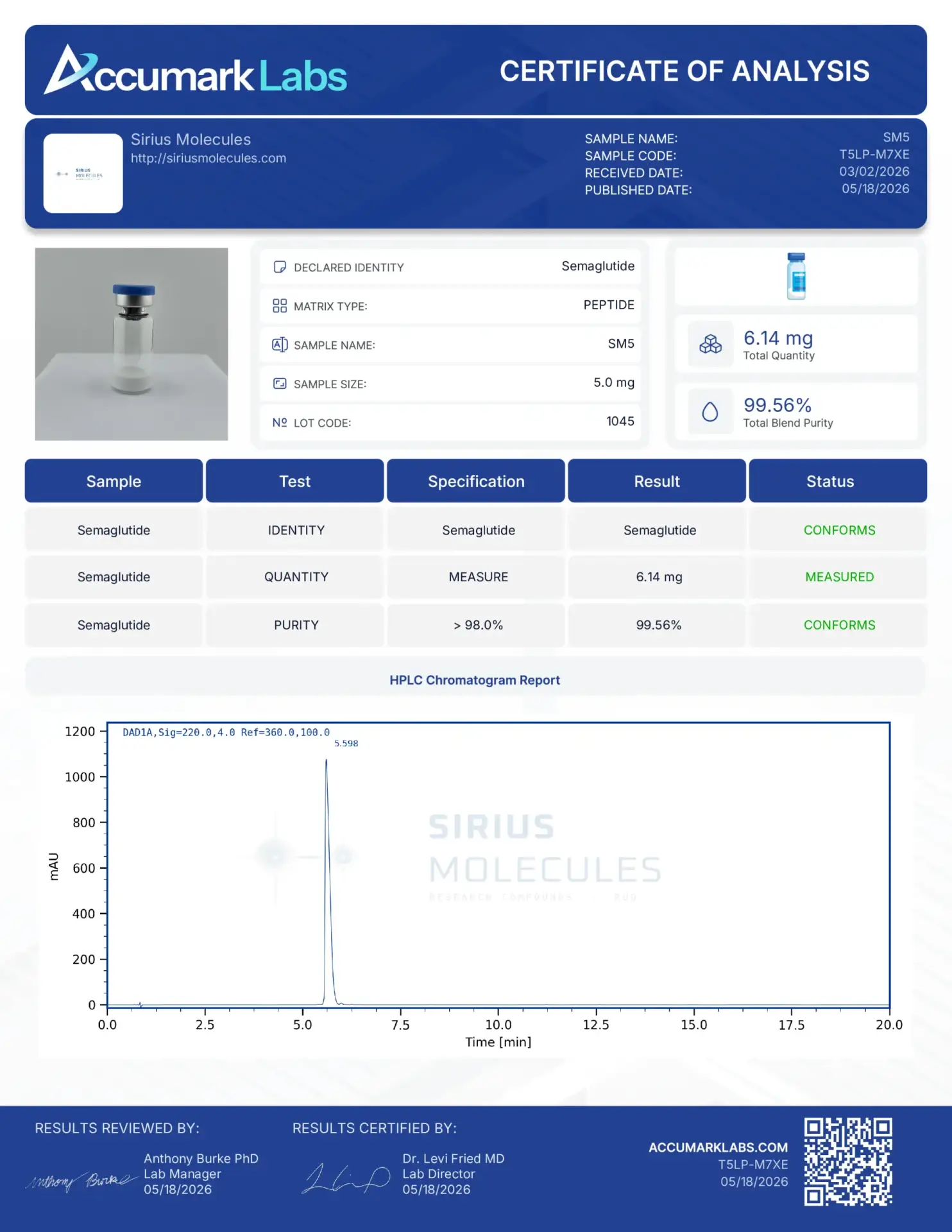
Overview
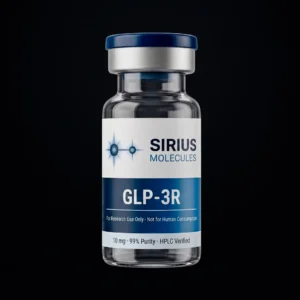
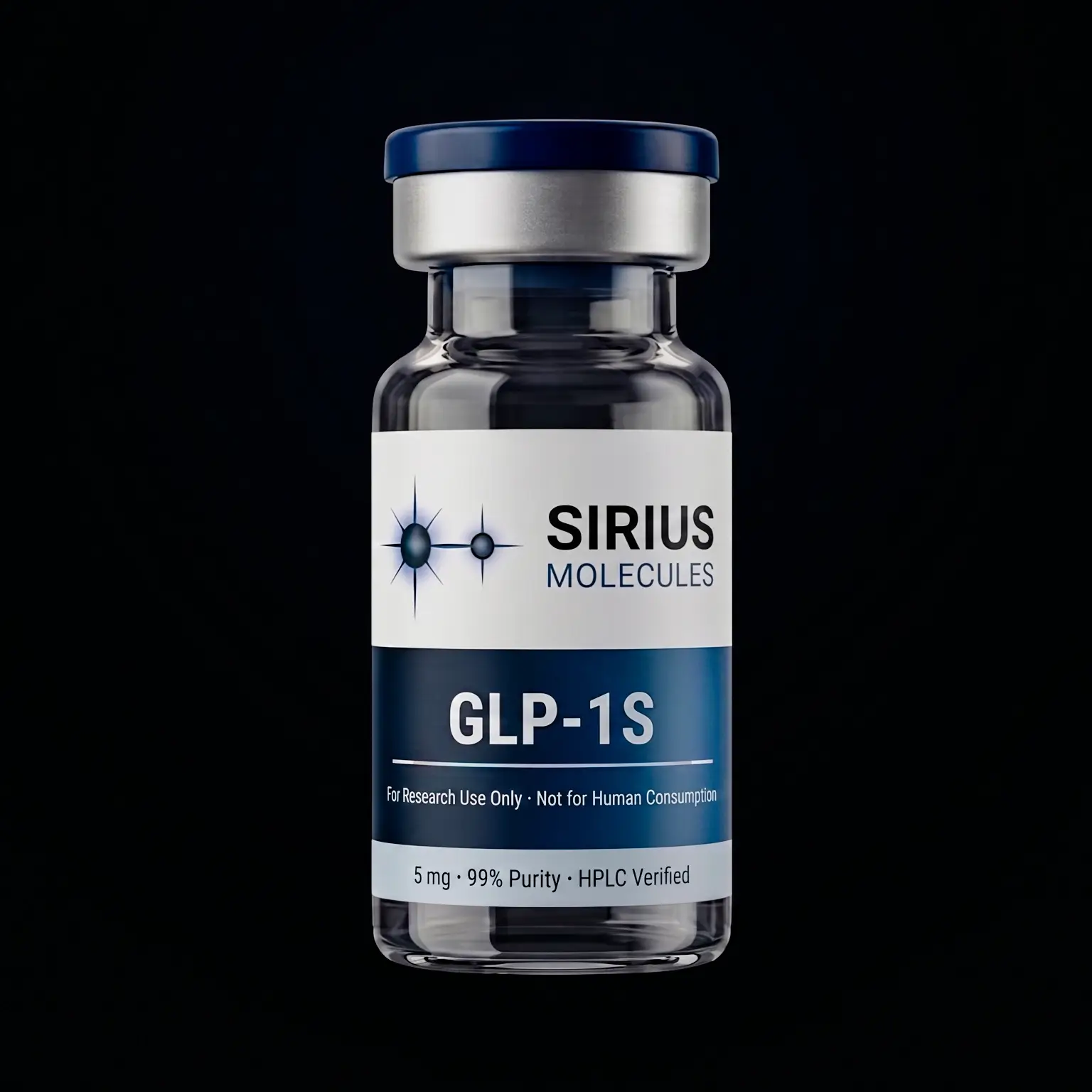
GLP-1S is a research-grade reference compound within the long-acting GLP-1 receptor agonist class. Chemically characterized as a modified analog of human glucagon-like peptide-1(7-37) with amino acid substitutions and a C18 fatty-acid side chain for albumin binding, the compound has been studied in extensive preclinical and clinical research for its role in GLP-1 receptor pharmacology, glucose-dependent insulinotropic pathways, and central appetite signaling research (Knudsen & Lau, 2019 — PMID: 31184732).
History
The GLP-1S class emerged from long-running research efforts to extend the half-life of native GLP-1, which has a plasma half-life of only 1-2 minutes due to rapid DPP-IV degradation. Amino acid substitutions at positions 8 (Aib) and 34 (Arg) confer DPP-IV resistance, while the C18 fatty-acid chain at position 26 enables reversible albumin binding and extended circulation. Research has subsequently expanded across metabolic, cardiovascular, and neurological pathway models (Lau et al., 2015).
Structure & Molecular Data
| CAS Number | 910463-68-2 |
| Molecular Formula | C₁₈₇H₂₉₁N₄₅O₅₉ |
| Molecular Weight | 4,113.58 g/mol |
| Amino Acid Count / Structure | 31-amino-acid modified peptide |
| PubChem CID | 56843331 |
| Sequence | Modified human GLP-1(7-37) analog with fatty-acid side chain (C18 diacid) for albumin binding and DPP-IV resistance |
| Appearance | Lyophilized white-to-off-white powder |
| Storage | Store at -20°C. Protect from light and moisture. |
| Solubility | Soluble in sterile water and bacteriostatic water for research preparation |
Compound Class & Mechanism
GLP-1S acts as a selective agonist at the GLP-1 receptor (GLP-1R), a class B G protein-coupled receptor expressed on pancreatic beta cells, hypothalamic neurons, cardiac tissue, and gastric smooth muscle. Receptor activation triggers Gs-mediated adenylyl cyclase activation and downstream cAMP-PKA signaling in preclinical models.
Research has documented pharmacodynamic effects associated with GLP-1R activation including glucose-dependent insulinotropic activity at pancreatic beta cells, modulation of hypothalamic satiety signaling pathways, delayed gastric emptying in preclinical models, and cardiovascular pathway effects. The C18 fatty-acid chain and amino acid substitutions extend the functional half-life to approximately 7 days in research protocols (Marso et al., 2016 — PMID: 27633186).
Research Findings
The GLP-1S-class reference compound has been investigated in an extensive body of preclinical and clinical research spanning metabolic pathway research, cardiovascular biology, and neurological pathway studies. Published research has documented findings in the following domains:
Key Research Areas
- Metabolic Pathway Research: GLP-1R-mediated glucose homeostasis research in preclinical models
- Body Composition Research: hypothalamic satiety pathway research in controlled settings
- Cardiovascular Pathway Research: cardiovascular endpoint research in preclinical and clinical models
- Neurological Research: GLP-1R expression in CNS research models
Collectively, the GLP-1S-class reference compound occupies a central position in contemporary metabolic research, with research interest extending across pancreatic pathway biology, central appetite regulation, cardiovascular research, and emerging neurological research domains (Lincoff et al., 2023).
Research Context
Researchers study G1-S as a reference compound for long-acting GLP-1R agonist pharmacology. The compound’s extended half-life and receptor selectivity profile make it a foundational tool for investigating GLP-1R-mediated pathway biology in chronic administration research protocols.
References
Knudsen LB., Lau J. (2019). The discovery and development of liraglutide and [GLP-1S]. Frontiers in Endocrinology. PMID: 31184732
Lau J. et al. (2015). Discovery of the once-weekly glucagon-like peptide-1 (GLP-1) analogue [GLP-1S]. Journal of Medicinal Chemistry.
Marso SP. et al. (2016). [GLP-1S] and cardiovascular outcomes in patients with type 2 diabetes (SUSTAIN-6). NEJM. PMID: 27633186
Wilding JPH. et al. (2021). Once-weekly [GLP-1S] in adults with overweight or obesity (STEP 1). NEJM.
Lincoff AM. et al. (2023). [GLP-1S] and cardiovascular outcomes in obesity without diabetes (SELECT). NEJM.
Drucker DJ. (2018). Mechanisms of action and therapeutic application of glucagon-like peptide-1. Cell Metabolism.
Regulatory & Legal Notice
| REGULATORY & LEGAL NOTICE
Intended Use. This product is sold exclusively as a research chemical for use in controlled laboratory settings by qualified scientific professionals. It is intended solely for in vitro research, analytical standards, and non-clinical preclinical experimentation. The product is not a drug, dietary supplement, cosmetic, food product, or consumer article of any kind. Prohibited Uses. This product is NOT for use in humans, NOT for veterinary use, NOT for in vivo use in any species, NOT for diagnostic use, NOT for therapeutic use, NOT for food or agricultural use, and NOT for compounding into any preparation intended for administration to humans or animals. Qualified Professionals Only. Purchasers represent that they are qualified scientific professionals, licensed researchers, or authorized personnel at a research institution, and that this product will be handled in accordance with all applicable institutional, federal, state, and local regulations governing research chemicals. Regulatory Notice. The statements made regarding this product have not been evaluated by the U.S. Food and Drug Administration. This product has not been approved by the FDA for any therapeutic, diagnostic, or preventive use. Not a Compounding or Outsourcing Facility. Sirius Molecules is a research chemical supplier. Sirius Molecules is not a compounding pharmacy or outsourcing facility as defined under Sections 503A or 503B of the Federal Food, Drug, and Cosmetic Act. Legal Compliance. Purchasers are solely responsible for ensuring that their acquisition, possession, handling, and use of this product complies with all applicable laws and regulations in their jurisdiction. |